
Goal tracking app
A goal tracking app that turns goals into something you do on Tuesday
Goal setting is the easy half. Almost everyone can write down what they want in January; far fewer can tell you what that goal requires of them on an ordinary Tuesday in March.
Liftora's goal tracking is built backwards from that Tuesday: it turns the goal into something you do this week, and today's actions are what get tracked.
4.7★ · 500+ downloads · Free on iOS & Android
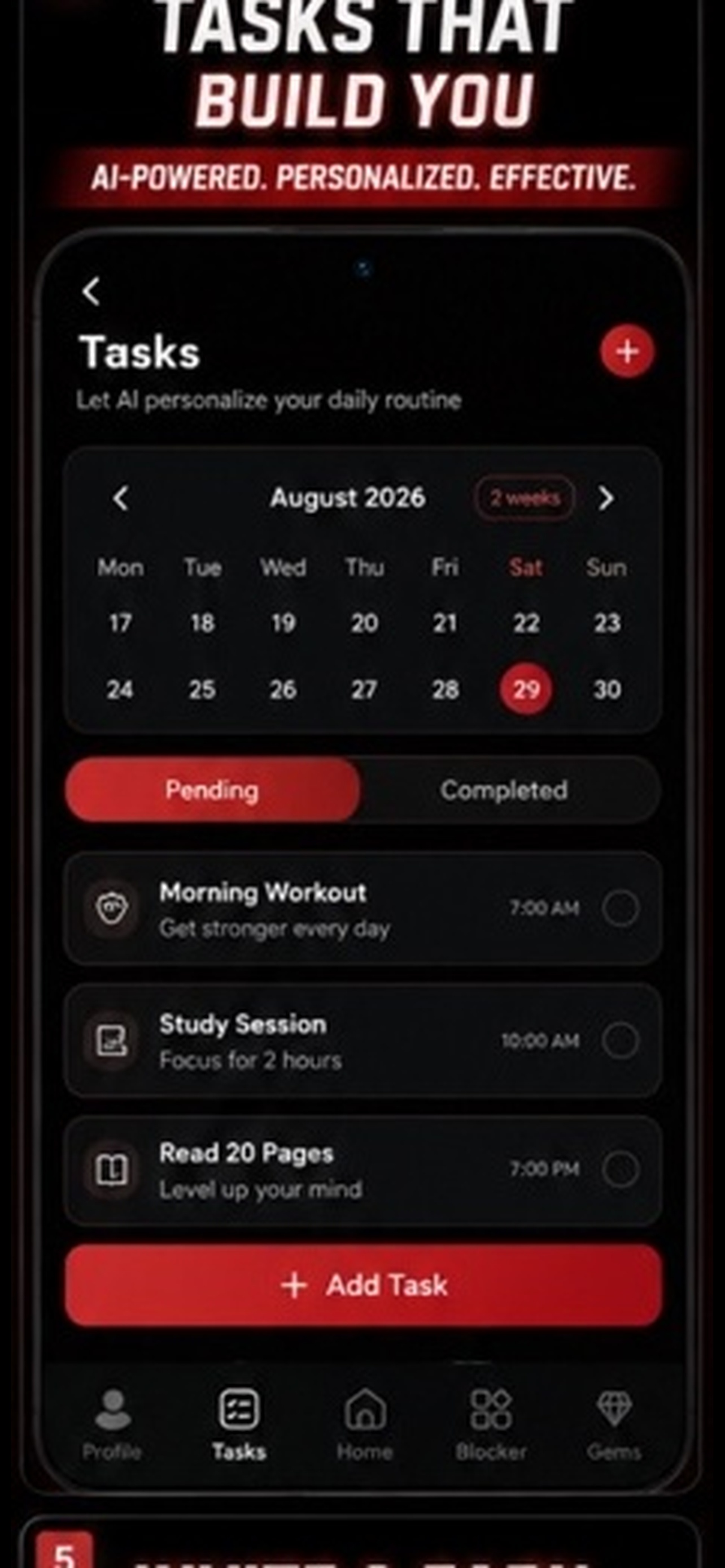
Goal → milestones → daily habits
Every goal in Liftora decomposes. A long goal becomes milestones with dates; each milestone becomes a small number of repeating actions; those actions land in your daily plan alongside everything else you've committed to. The decomposition removes the two ways goals usually die: vagueness ('get fit') and distance ('by December'). Every layer — milestone, weekly action, today's slot — is close enough to act on and specific enough to check. Nothing sits at the level of 'someday'. Every goal, at every moment, has a next action scheduled inside an actual day this week. It also makes progress honest: if the daily habits aren't happening, the milestone forecast moves, and you find out in week two instead of month eleven.
- Milestones with target dates and visible progress
- The habits feeding each goal, and their completion rate
- Projected progress based on your actual pace, not your hopes
- A weekly review that flags goals with no recent activity
Frameworks, used lightly
SMART goals, OKRs and the 12-Week Year all work when they force specificity and a deadline, and all become bureaucracy when you over-apply them. Liftora borrows the useful parts — measurable outcome, short horizon, weekly check — without asking you to maintain a planning system on the side. The result is a goal system you don't have to manage. There's no spreadsheet to maintain, no Sunday lost to re-planning — the structure lives inside the daily plan you're already following. If you already think in OKRs or twelve-week cycles, the structure maps straight across; if you've never heard of them, you'll never need to.
Why goals stall, and what the tracker does about it
Goals rarely die from a dramatic failure. They stall because they stop having a next action, or because the daily habits feeding them get squeezed out by everything else. Liftora watches for both: a goal with no completed actions in a fortnight gets surfaced in the review, with the option to shrink it, reschedule it, or admit it isn't a priority right now and archive it. Catching the stall early changes the outcome completely. A goal flagged at two quiet weeks gets a smaller commitment and survives; the same goal discovered at three silent months is usually a write-off.
Dropping a goal deliberately is a legitimate outcome. Carrying five dead ones is what makes people stop opening the app.
Personal goals, not just work targets
A half marathon, a language, a savings figure, a portfolio, a thesis, or eight hours of sleep on weeknights — the structure is the same. Define the outcome, pick the weekly actions, track follow-through, adjust monthly. The personal ones benefit most, oddly, because nothing else holds them accountable. Work goals have managers and deadlines; the half marathon has only you — until the tracker gives it a schedule and a record. The personal ones are often where the payoff is largest, because they're the goals nothing else in your life is organised to protect. Give a personal goal the same machinery — schedule, tracking, review — and it starts behaving like a work goal: visible, progressing, and hard to quietly abandon.
Frequently asked questions
- How do I set goals I'll actually achieve?
- Make the outcome measurable, set a horizon of twelve weeks rather than a year, and define the two or three weekly actions that drive it. Then track the actions — they're the part you control.
- How many goals should I track at once?
- One or two active goals with real weekly time attached. Anything more and the daily plan stops being achievable.
- Does Liftora track progress automatically?
- Progress comes from the habits and milestones tied to the goal, so completing your daily actions updates the goal without separate bookkeeping.
- What if I fall behind?
- The weekly review shows the gap and the coach proposes a smaller weekly commitment or a later date. Adjusting beats abandoning.
Keep reading
Try Liftora free
AI coaching, habit tracking, goals, routines and app blocking in one app. Free core features on iOS and Android.